If your medicine storage is spread out across your home like mine—some in the bathroom cabinet, some in the kitchen—it can be tricky to keep track of everything. I used to lose track of what I had, only to find expired medications or duplicates I didn’t need. Let me show you how to organize your medicine cabinet, no matter where you store it, so it’s tidy, functional, and safe for your family.
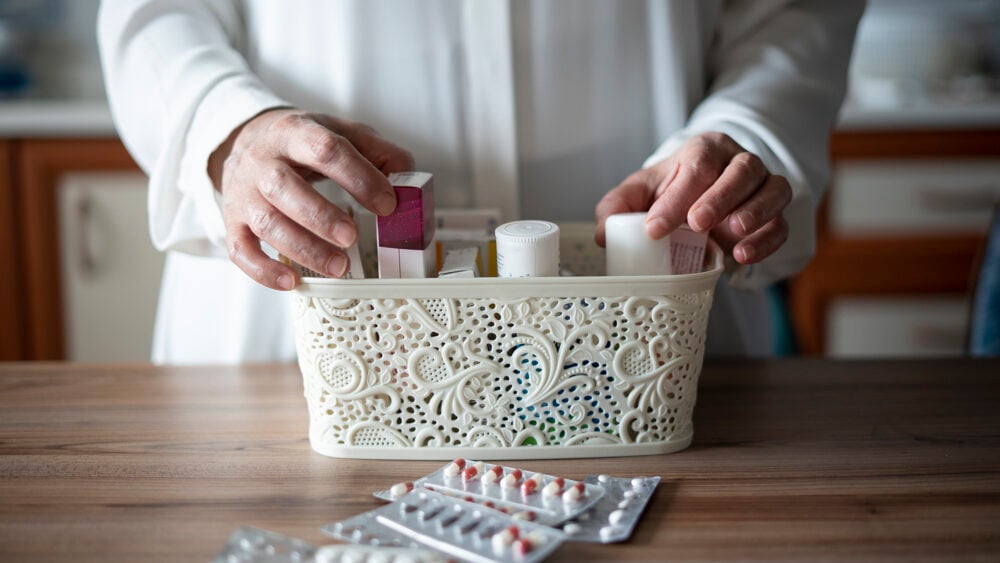
When I took the time to declutter and organize my medications and supplements, I noticed how much easier it became to find what I needed—whether it was in the bathroom or the kitchen. If you’re working on making your entire bathroom more organized, you might also want to check out my post on How to Organize Under the Bathroom Sink.
How to Organize a Medicine Cabinet Step-by-Step
1. Gather Everything in One Place
Start by pulling out all the medications and first-aid supplies from wherever you store them. Having everything in one spot helps you see what you have and eliminates the risk of missing anything.
2. Check Expiration Dates
Go through each item and toss anything that’s expired or damaged. Be sure to dispose of medications properly—most pharmacies or local authorities have safe disposal programs.
3. Sort by Category
Instead of focusing on a single cabinet, organize by type and location:
- Frequently used items: Pain relievers, allergy medications, and first-aid essentials can go in the kitchen or an easy-to-access drawer.
- Occasional-use items: Cold medicines, thermometers, and prescriptions can stay in the bathroom cabinet or a higher kitchen shelf.
- Emergency supplies: Keep a dedicated first-aid kit in a known spot, like a hall closet.
4. Use Storage Bins or Containers
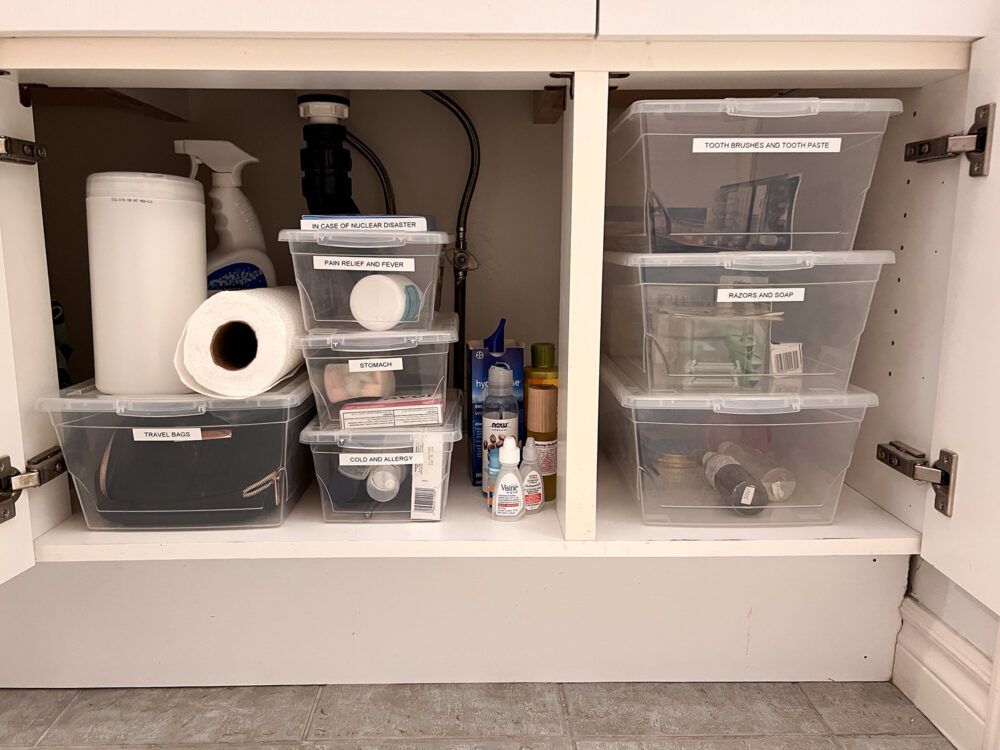
I use small, labeled bins to keep everything organized in its specific location. Clear bins work well for both bathroom and kitchen cabinets so you can quickly see what’s inside.
5. Keep Medications Safe
If you have kids or pets, store medications in high cabinets or use lockable containers. Even childproof caps are no substitute for safe storage!
6. Avoid Moisture
Humidity from the bathroom can damage medications, so I try to keep most of mine in the kitchen cabinet. If you’re short on space there like I am, airtight containers can help protect items stored in the bathroom.
7. Regularly Review and Restock
Every six months (or sooner if someone is the house is or has been sick), I like to check my medication supplies. It’s a quick way to toss expired items, restock essentials, and ensure everything is still organized.

FAQs
Use labeled bins in each location and organize by category. For example, keep daily medications in one bin and first-aid supplies in another.
Think about where you’re most likely to use them. Keep first-aid supplies and thermometers in the bathroom and daily medications in the kitchen for convenience.
Never flush them! Use a pharmacy or local disposal program to safely get rid of old medications.
More Bathroom Organizing Ideas
Whether you have a central medicine cabinet or not, it doesn’t mean you can’t stay organized. By keeping everything tidy and in its proper place—whether in the kitchen, bathroom, or both—you’ll save yourself time and frustration. It feels so good knowing that everything is easy to find and safe for my family, and I know you’ll feel the same once you get your system set up.
Where are the medicines stored at your house? Do you need to give them a little tidy up? Let me know in the comments below.