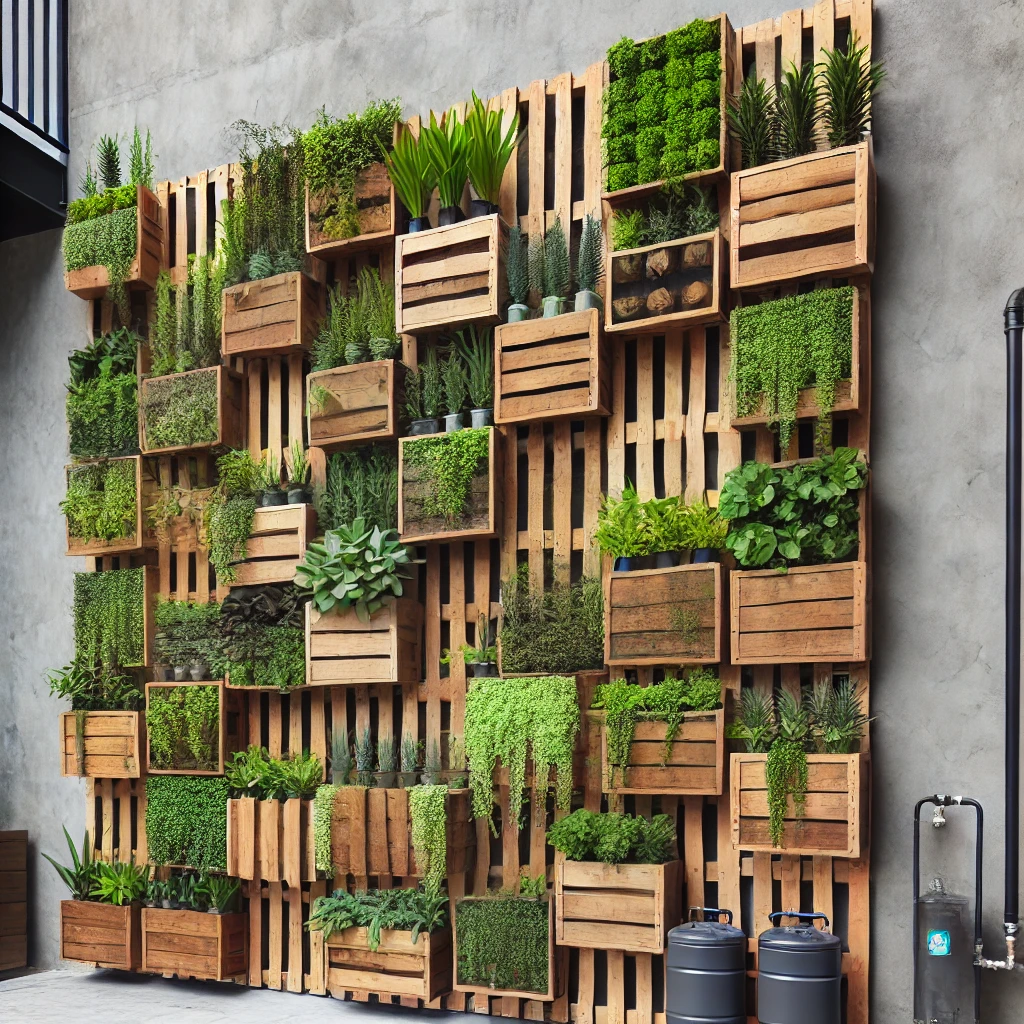
A vertical garden is a great solution for adding greenery to small spaces. By growing plants vertically on a wall or other upright structures, you can maximize space and create a fresh, natural atmosphere. Here’s a complete guide to making your own vertical garden at home.
1. Choose the Right Design and Location
The first step is to decide on a design that suits your home. Determine whether your vertical garden will be indoor or outdoor. Choose a location that receives adequate sunlight for plant growth. Additionally, consider accessibility for watering and maintenance.
2. Prepare the Support Structure
The support structure holds the plants and planting medium. You can use various materials such as wooden pallets, PVC pipes, or metal grids. Ensure the structure is sturdy enough to support the weight of the plants and soil. If using wood, treat it to prevent moisture damage.
3. Install a Protective Layer on the Wall
Before attaching the support structure, cover the wall with plastic sheeting or a waterproof material to prevent root penetration and water damage.
4. Select the Right Growing Medium
The growing medium should retain moisture well while allowing excess water to drain. A mixture of soil, compost, and cocopeat (coconut fiber) is a great option. This provides the necessary nutrients while maintaining proper moisture levels.
5. Choose Suitable Plants
Select plants that thrive in your environment and require similar levels of care. Some great choices include:
- Foliage plants – e.g., pothos, staghorn ferns, and maidenhair ferns.
- Flowering plants – e.g., orchids, begonias, and spider plants.
- Herbs – e.g., mint, basil, and rosemary.
Ensure the selected plants have similar water and light requirements for easier maintenance.
6. Assemble and Plant
Arrange pots or planting pockets on the support structure according to your design. Fill them with the growing medium, then plant the seedlings or cuttings. Firmly press the soil around the plants to provide support.
7. Watering and Maintenance
Regularly water the plants, but avoid overwatering to prevent root rot. Consider installing a drip irrigation system for easier watering. Trim and fertilize the plants as needed to keep them healthy.
8. Enjoy Your Vertical Garden!
Once your vertical garden is set up, you can enjoy the beauty of lush greenery in your home. Over time, make adjustments to improve the plant arrangement and keep everything in top condition.
By following these steps, you can create a stunning and space-saving garden that enhances your living space! 🌿✨
How to Create a Vertical Garden: A Step-by-Step Guide
A vertical garden is a great solution for adding greenery to small spaces. By growing plants vertically on a wall or other upright structures, you can maximize space and create a fresh, natural atmosphere. Here’s a complete guide to making your own vertical garden at home.
1. Choose the Right Design and Location
The first step is to decide on a design that suits your home. Determine whether your vertical garden will be indoor or outdoor. Choose a location that receives adequate sunlight for plant growth. Additionally, consider accessibility for watering and maintenance.
2. Prepare the Support Structure
The support structure holds the plants and planting medium. You can use various materials such as wooden pallets, PVC pipes, or metal grids. Ensure the structure is sturdy enough to support the weight of the plants and soil. If using wood, treat it to prevent moisture damage.
3. Install a Protective Layer on the Wall
Before attaching the support structure, cover the wall with plastic sheeting or a waterproof material to prevent root penetration and water damage.
4. Select the Right Growing Medium
The growing medium should retain moisture well while allowing excess water to drain. A mixture of soil, compost, and cocopeat (coconut fiber) is a great option. This provides the necessary nutrients while maintaining proper moisture levels.
5. Choose Suitable Plants
Select plants that thrive in your environment and require similar levels of care. Some great choices include:
- Foliage plants – e.g., pothos, staghorn ferns, and maidenhair ferns.
- Flowering plants – e.g., orchids, begonias, and spider plants.
- Herbs – e.g., mint, basil, and rosemary.
Ensure the selected plants have similar water and light requirements for easier maintenance.
6. Assemble and Plant
Arrange pots or planting pockets on the support structure according to your design. Fill them with the growing medium, then plant the seedlings or cuttings. Firmly press the soil around the plants to provide support.
7. Watering and Maintenance
Regularly water the plants, but avoid overwatering to prevent root rot. Consider installing a drip irrigation system for easier watering. Trim and fertilize the plants as needed to keep them healthy.
8. Enjoy Your Vertical Garden!
Once your vertical garden is set up, you can enjoy the beauty of lush greenery in your home. Over time, make adjustments to improve the plant arrangement and keep everything in top condition.
By following these steps, you can create a stunning and space-saving garden that enhances your living space! 🌿✨